

HVAC in Florida
Cooling season is long, and humidity is part of the load. The federal heat pump credit is closed for equipment placed in service after December 31, 2025.
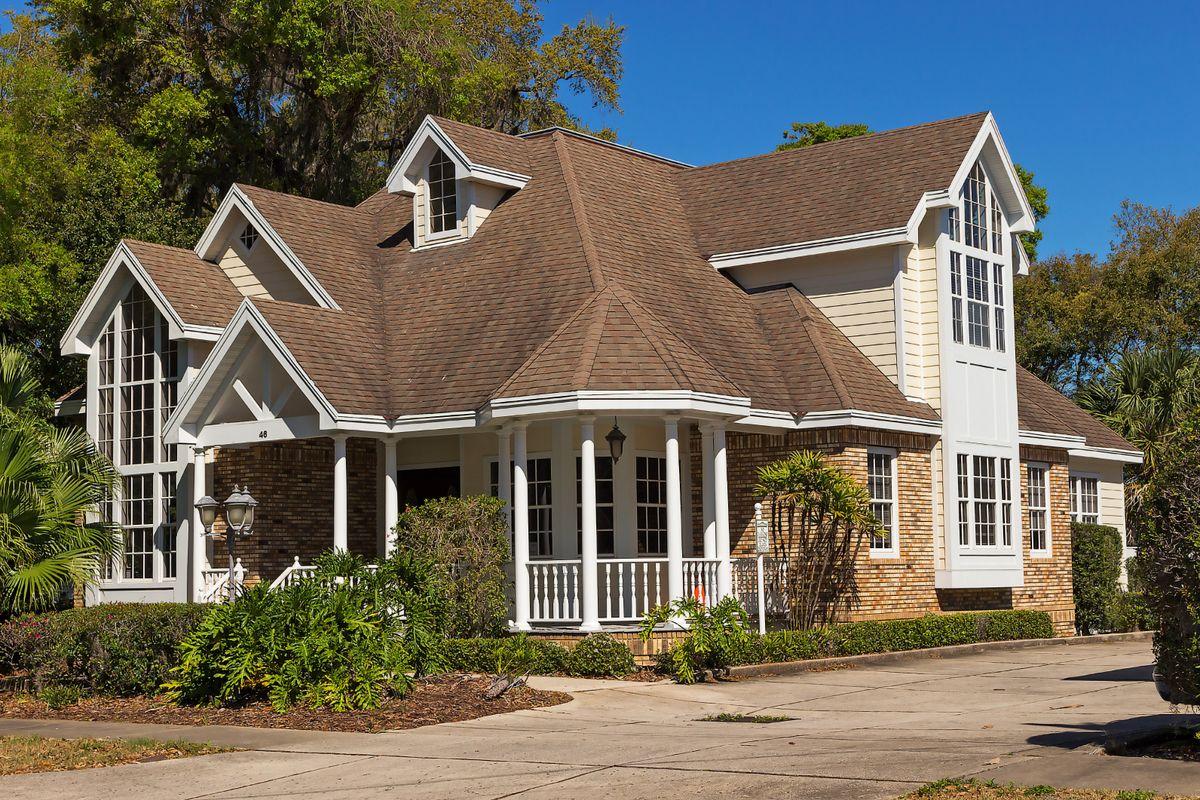
Florida conditions
Florida is a hot, humid, hurricane-exposed state. South Florida is not the same design problem as the Panhandle or inland Central Florida. Wind, rain, and flood maps change by address.
The Florida Building Code is statewide. The 8th Edition (2023) took effect December 31, 2023. The Commission's workplan sets the 9th Edition (2026) effective date at December 31, 2026. The High Velocity Hurricane Zone is Miami-Dade and Broward. Other counties use the wind-borne debris map instead.
Signs the system is done
Weak airflow, a system that runs all afternoon and never catches up, ice on the line, water around the air handler, and a condenser that trips its breaker are reasons to have it diagnosed. Age alone is not a diagnosis. A dirty coil, a failed capacitor, or a crushed duct can imitate a dead compressor.
Heat pump, central air, and SEER2
A central air conditioner cools. It needs a separate heat source, often a furnace or electric strips. A heat pump cools and heats by moving heat. In a hot climate the cooling rating matters most. In a cold climate the heating rating, HSPF2, matters too, and a cold-climate heat pump is a different specification from a Florida heat pump.
The Department of Energy's 2023 standards FAQ says split-system air conditioners manufactured on or after January 1, 2023 have to meet 13.4 SEER2 nationwide, and split-system heat pumps have to meet 14.3 SEER2 and 7.5 HSPF2. Southeast and Southwest states, including Florida, Georgia, North Carolina, Texas, Arizona, and California, also apply a higher regional standard to split-system air conditioners at installation. SEER2 is a new test. Do not treat it as the same number as an older SEER sticker. ENERGY STAR's split-system heat pump criteria are at least 15.2 SEER2, 11.0 EER2, and 7.8 HSPF2.
Match the indoor coil or air handler to the outdoor unit. A new condenser on an old mismatched coil often will not deliver the SEER2 on the sticker. Duct leaks and a bad return can waste the new equipment. Ask for a load calculation. Square footage alone is not one.
Published cost ranges
Angi's 2026 HVAC replacement guide says most homeowners spend $5,000 to $12,500, with a national average of $7,500. The same guide says a job with new ducts and extras can reach $22,000, lists central air at $3,900 to $7,900, and lists one heat pump band at $4,200 to $7,600. A separate 2026 Angi heat pump guide says most homeowners pay $4,236 to $7,942, with an average of $6,087. The two guides do not match to the dollar, so we cite both and do not invent a blend.
We do not publish a city or county average. Doing that without a public local source would be a guess.
What the schedule is made of
A hvac job usually runs measure, product choice, permit, order, install, then inspection. The long part is often the permit review and the factory lead time, not the day of installation. This page does not print a number of weeks, because lead times and building departments differ and a made-up range would be a guess.
Credits and programs
The IRS says the Energy Efficient Home Improvement Credit is not allowed for property placed in service after December 31, 2025. Through that date the credit was 30 percent, with annual caps that included $600 for windows and skylights and $2,000 for heat pumps. Those caps are history, not a 2026 discount. The Residential Clean Energy Credit is not allowed for expenditures made after December 31, 2025. The IRS treats that expenditure as made when the original installation is completed, so a 2025 deposit does not keep the credit for a system finished in 2026. This is a reading of IRS pages, not tax advice.
How to compare companies
Florida license records are public at the Department of Business and Professional Regulation. Look up the license before you pay a deposit. A city may also require a local registration. The state record does not tell you whether the person is available or careful.
A useful quote names the product or equipment model, what is torn out, who pulls the permit, what is excluded, and the payment schedule. A deposit can be reasonable. Paying the entire job before any work starts is a risk you do not have to take. Get two quotes against the same scope and see which assumptions differ.
- The license number, and the name it is issued to.
- Who pulls the permit, and in whose name.
- What happens if hidden damage shows up.
- The warranty on the product and the warranty on the labor, as two separate lines.
After the work
Change filters, keep the condensate drain clear, and hose the outdoor coil when it is packed with dirt. A humid climate punishes a clogged drain. That maintenance does not replace a load calculation when the equipment is being changed.
Questions
Who permits hvac work in Florida?
The local building department. Florida uses a statewide building code, and cities or counties issue the permit. Miami-Dade and Broward are the High Velocity Hurricane Zone. Other counties use the wind-borne debris map.
Are the dollar figures local?
No. They are national published ranges, cited at the bottom of this page. A state multiplier was not invented.
Sources
- Angi, How Much Does HVAC Replacement Cost? (2026 data) As of November 21, 2026.
- Angi, How Much Does a Heat Pump Cost? (2026 data) As of November 21, 2026.
- IRS, Energy Efficient Home Improvement Credit As of November 21, 2026.
- IRS, FAQs on changes to sections 25C and 25D under Public Law 119-21 (July 4, 2025) As of November 21, 2026.
- U.S. Department of Energy, 2023 central air conditioner and heat pump standards FAQ As of November 21, 2026.
- ENERGY STAR, heat pump key product criteria As of November 21, 2026.
- FEMA Flood Map Service Center As of November 21, 2026.
- Florida DBPR license lookup As of November 21, 2026.
- Florida Building Commission, code edition notice As of November 21, 2026.
- Florida Building Commission, 9th Edition (2026) workplan As of November 21, 2026.
- Florida Building Commission, March 2026 workshop materials on wind-borne debris and opening protection As of November 21, 2026.
- Florida Statutes section 215.5586 (2026), My Safe Florida Home Program As of November 21, 2026.
- Florida Statutes section 627.0629, wind mitigation discounts As of November 21, 2026.
Related pages
- HVACThe hub page for this service.
- HVAC cost guideNational ranges with sources.
- How to choose hvacQuestions to ask before you hire.
- HVAC in FloridaStatewide code and program notes.
- HVAC in Palm Beach CountyWind-borne debris is decided by address.
- HVAC in Broward CountyHigh Velocity Hurricane Zone.
- HVAC in Miami-Dade CountyHigh Velocity Hurricane Zone.