

Roofing in Broward County, Florida
Every Broward roof is an HVHZ roof. Inland Pembroke Pines and beachfront Hollywood use the same zone, even though the flood exposure is different. The permit looks at the covering, the underlayment, and the attachments.
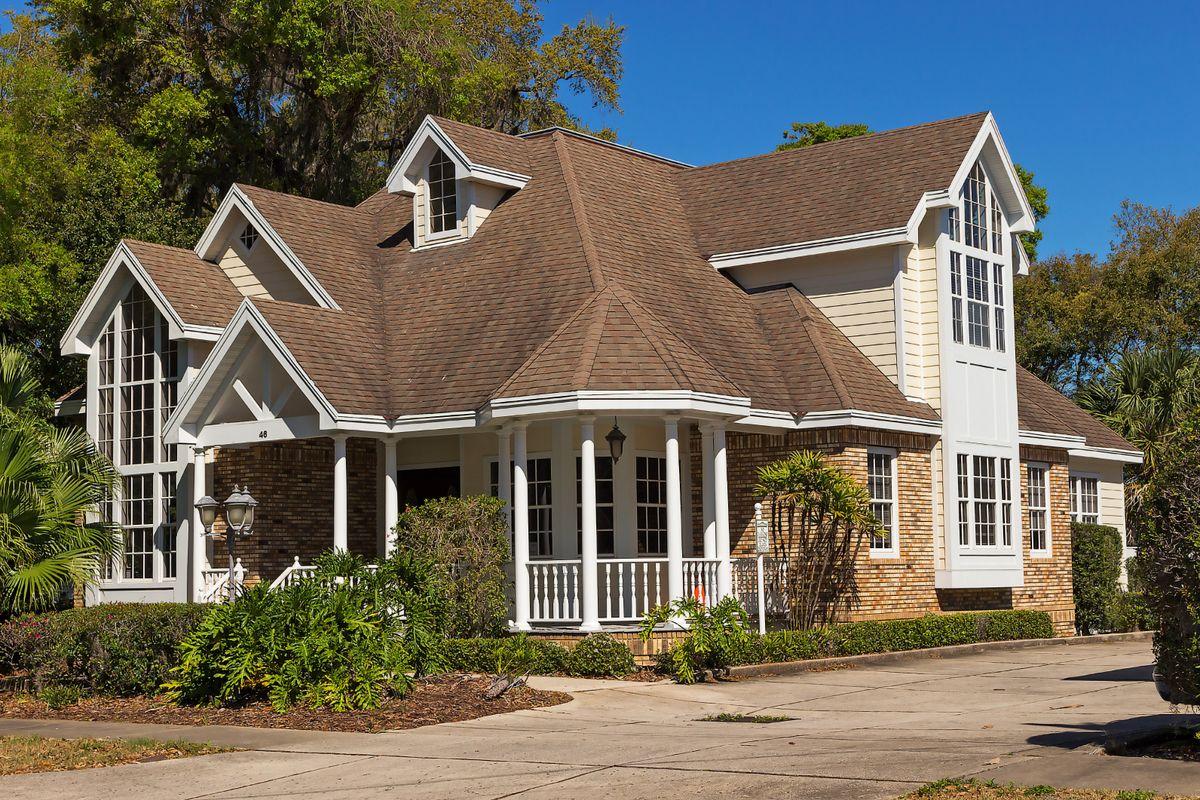
Broward County
Broward County is one of the two High Velocity Hurricane Zone counties in the Florida Building Code. The other is Miami-Dade. Fort Lauderdale, Hollywood, Pembroke Pines, Coral Springs, and the rest of the county share that zone, whether the house is on the beach or inland.
Tile, metal, and shingles are all used. The product has to be approved for HVHZ installation, not only for general Florida use. Ask for that limitation in writing before you pay a deposit.
My Safe Florida Home can help eligible older homes with roof-to-wall connections, roof-deck fastening, and secondary water resistance. The program FAQ says replacing the covering is funded when it is needed to complete those items, and a cosmetic reroof alone is not.
The city where the house stands issues the building permit. Start there, not at the county building division, unless the address is in the county's municipal services district.
How the cities in this county differ
A reroof in Fort Lauderdale uses the same HVHZ product rule as a reroof in Coral Springs or Pembroke Pines. What changes is the roof you already have and the flood map. Beach and canal houses in Fort Lauderdale, Hollywood, and Pompano Beach are more often in mapped flood zones. Inland cities still need an HVHZ-approved covering, underlayment, and a city permit.
Fort Lauderdale
Fort Lauderdale runs from the Atlantic beach through the Intracoastal and the New River to inland neighborhoods. The whole city is in the High Velocity Hurricane Zone.
Downtown towers, canal houses, and inland single-family streets share the HVHZ rule and do not share the same flood exposure.
Hollywood
Hollywood has a beach, a broadwalk, the Intracoastal, and inland neighborhoods west of I-95. All of it is in the HVHZ.
Beach blocks and houses west of I-95 can use the same impact rule and still need different flood checks.
Pembroke Pines
Pembroke Pines is inland southwest Broward. Being away from the beach does not remove the High Velocity Hurricane Zone.
A lot of the housing is newer suburban construction with association rules on exterior appearance.
Coral Springs
Coral Springs is a planned inland city in northwest Broward. It is inside the HVHZ because the whole county is.
Master-planned streets often have association standards for windows and roofs on top of the city permit.
Pompano Beach
Pompano Beach includes an oceanfront, the Intracoastal, and inland areas west of I-95. The city permits work inside the city.
Older beach cottages and newer inland houses will not have the same opening sizes. The HVHZ rule still applies to both.
Plantation
Plantation is inland central Broward. It is not on the beach, and it is still in the High Velocity Hurricane Zone.
The housing mix includes established subdivisions and newer infill. Association rules are common and sit beside the permit.
Signs the roof needs work
Look for missing or cupped shingles, cracked or slipped tile, granules in the gutters, daylight in the attic, stains on ceilings after wind-driven rain, and soft decking when you walk the roof. A stain can also be a flashing or a vent, so do not buy a whole roof because one ceiling spot is wet.
Shingle, metal, and tile
Asphalt shingles are the common covering and the one most national cost guides are built around. Architectural shingles are thicker than three-tab. Metal sheds water and is lighter. Tile, clay or concrete, is common on South Florida houses and costs more to install and to walk on. The covering is only the top layer. Underlayment, the deck, and how the roof holds onto the walls decide whether the house stays dry if the covering is damaged.
An overlay puts a new covering on top of the old one and skips the tear-off. It hides rotten decking. Many Florida permits expect a tear-off so the deck and the underlayment can be seen. Ask the building department before you accept an overlay.
Permits and inspections
Most building permits in Broward are issued by the city, not by the county. The county building division permits the Broward Municipal Services District and Fort Lauderdale International Airport, and it handles regional elevator work. The Board of Rules and Appeals hears code appeals and interpretations. It does not pull your permit for you.
Florida license records are public through the Department of Business and Professional Regulation. Look up the license before you pay a deposit. A city may also require local registration. The state record does not say whether the company is careful or available.
Look up the address on the FEMA Flood Map Service Center before you change the structure, a water heater location, or electrical equipment. This site does not assign a flood zone.
High Velocity Hurricane Zone
The High Velocity Hurricane Zone is Miami-Dade County and Broward County. Envelope products there need an approval that covers HVHZ use. Miami-Dade issues that approval as a Notice of Acceptance. A Florida product approval can also be used when the listing says it is approved for the HVHZ.
Florida Building Commission workshop materials describe a wind-borne debris region as areas within 1 mile of the coastal mean high water line where the ultimate design wind speed is 130 mph or greater, and areas where that wind speed is 140 mph or greater. Glazed openings in that region have to be impact resistant or protected. Openings within 30 feet of grade are tied to the large missile test. Confirm the code edition on the permit. The Commission lists the 8th Edition (2023) as effective December 31, 2023, and its workplan sets the 9th Edition effective date at December 31, 2026.
Published cost ranges
Angi's 2026 roof replacement guide says most homeowners pay $5,903 to $13,380, with a national average of $9,611. The same guide puts a typical job at $4 to $11 per square foot. Pitch, tear-off, and material move the total. This is not a South Florida tile price.
We do not publish a city or county average. Doing that without a public local source would be a guess.
What the schedule is made of
A roofing job usually runs measure, product choice, permit, order, install, then inspection. The long part is often the permit review and the factory lead time, not the day of installation. This page does not print a number of weeks, because lead times and building departments differ and a made-up range would be a guess.
Credits and programs
My Safe Florida Home is in Florida Statutes section 215.5586. It is not an entitlement and it depends on appropriation. The published 2026 statute requires a homesteaded, site-built, owner-occupied single-family home that is detached, or attached and not over three stories. A grant also requires an insured value of $700,000 or less, a build date before January 1, 2008, a program inspection in the prior 24 months, and low or moderate income as defined in section 420.0004. The usual match is $1 from the homeowner for $2 from the state, up to $10,000 from the state. Low-income applicants can receive up to $10,000 with no match. When an inspection recommends it, grants can cover opening protection and specific roof improvements. Approval has to come before construction. The Senate copy of the statute flags 2026 budget language and a possible July 1, 2027 revert. Check the statute and mysafeflhome.com before you count on the money.
The program FAQ says a roof covering replacement is eligible when it is needed to install roof-to-wall connections, stronger deck fastening, or secondary water resistance. A covering swap by itself is not eligible.
Florida Statutes section 627.0629 tells residential insurers to file actuarially reasonable discounts, credits, or deductible reductions for wind mitigation, including opening protection and roof features. The Office of Insurance Regulation publishes the inspection form. The dollar amount depends on the insurer and the house. We do not print a percent off.
How to compare companies
Florida license records are public at the Department of Business and Professional Regulation. Look up the license before you pay a deposit. A city may also require a local registration. The state record does not tell you whether the person is available or careful.
A useful quote names the product or equipment model, what is torn out, who pulls the permit, what is excluded, and the payment schedule. A deposit can be reasonable. Paying the entire job before any work starts is a risk you do not have to take. Get two quotes against the same scope and see which assumptions differ.
- The license number, and the name it is issued to.
- Who pulls the permit, and in whose name.
- What happens if hidden damage shows up.
- The warranty on the product and the warranty on the labor, as two separate lines.
After the work
Keep gutters and valleys clear. Look at pipe boots and flashing after a windstorm. Do not walk a tile roof unless you know how the tiles are set. A yearly look from the ground and from the attic catches more leaks than a sales visit.
Questions
Who permits roofing work in Broward County?
Most building permits in Broward are issued by the city, not by the county. The county building division permits the Broward Municipal Services District and Fort Lauderdale International Airport, and it handles regional elevator work. The Board of Rules and Appeals hears code appeals and interpretations. It does not pull your permit for you.
Repair or replace roofing in Broward County?
Repair when the failure is local and the rest of the system is sound. Replace when the material itself has failed across the house or the permit requires a different product than the one you have.
Sources
- Broward County Building Code Division As of November 21, 2026.
- Broward County Board of Rules and Appeals As of November 21, 2026.
- Angi, How Much Does Roof Replacement Cost? (2026 data) As of November 21, 2026.
- Florida Statutes section 215.5586 (2026), My Safe Florida Home Program As of November 21, 2026.
- My Safe Florida Home program FAQ As of November 21, 2026.
- Florida Building Commission, code edition notice As of November 21, 2026.
- Florida Building Commission, 9th Edition (2026) workplan As of November 21, 2026.
- Florida Building Commission, March 2026 workshop materials on wind-borne debris and opening protection As of November 21, 2026.
- Florida Statutes section 627.0629, wind mitigation discounts As of November 21, 2026.
- Florida Office of Insurance Regulation, wind mitigation resources As of November 21, 2026.
- FEMA Flood Map Service Center As of November 21, 2026.
- Florida DBPR license lookup As of November 21, 2026.
- Florida Building Code product approval search As of November 21, 2026.